




您当前所在的位置是:首页>>新闻资讯>>天图简讯
天津图书馆外国文学撷珍(Classics Reading)第60期:《父与子》(一)
发布时间:2024-11-12
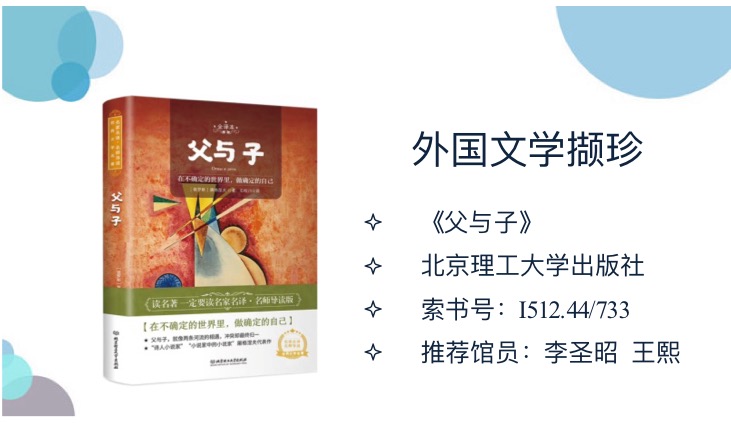
昨夜清霜冷絮裯,纷纷红叶满阶头。流岚渺渺,枫叶飘飘,清冷的霜花悄然凝结,纷纷扬扬的红叶铺满台阶。在初冬的夜晚,与亲人围炉夜话,温酒煮茶,在热气腾腾的烟火气里,浓浓的亲情驱走夜的寒冷。本期为大家推荐的书目是俄国作家伊凡·谢尔盖耶维奇·屠格涅夫的作品《父与子》。让我们一起展开书卷,感受冬的寂静,重温这部经典之作。
作品简介
《父与子》是俄国作家屠格涅夫创作的长篇小说,也是其代表作,发表于1862年。本书讲述了出身平民的巴扎罗夫跟随朋友、贵族子弟基尔沙诺夫一起去其父亲的田庄上作客,与基尔沙诺夫一家、特别是阿尔卡狄的伯父巴威尔在观点上发生尖锐冲突,后又因爱上奥金左娃而陷入消极状态,直至死亡。小说创作于俄国平民文化阶层新兴之际,反映了社会政治改革不断深化之时不同阵营之间的尖锐思想斗争。
作者简介
伊凡·谢尔盖耶维奇·屠格涅夫(Ivan Sergeevich Turgenvev,1818-1883),十九世纪俄国批判现实主义作家。出生于奥廖尔省一个贵族家庭,自幼厌恶农奴制,曾先后在莫斯科大学、彼得堡大学就读,毕业后到柏林进修,回国后与别林斯基成为至交。1847-1852年完成成名作《猎人笔记》。其主要作品有长篇小说《罗亭》《贵族之家》《前夜》《父与子》《处女地》,中篇小说《阿霞》《初恋》等。
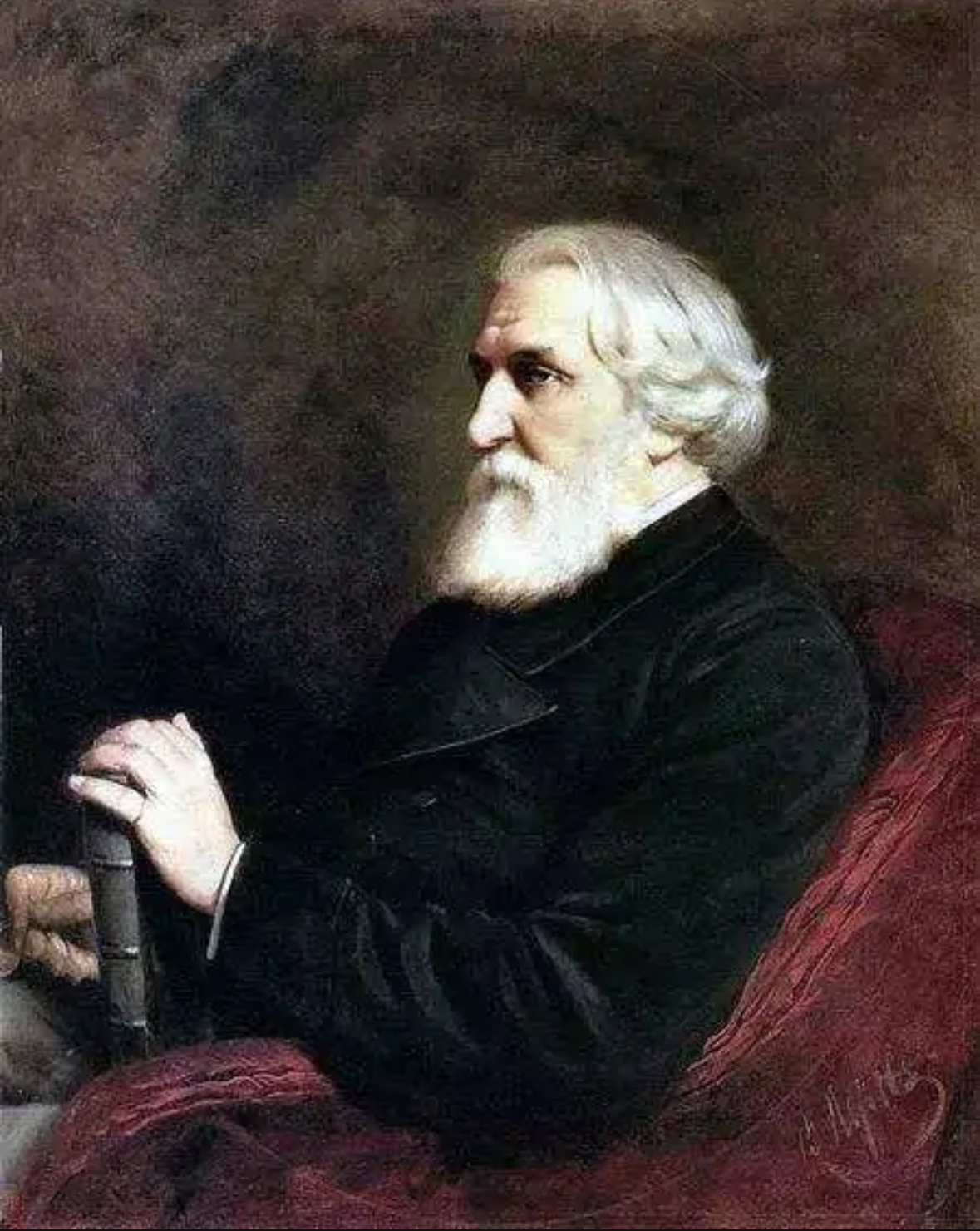
俄国作家伊凡·谢尔盖耶维奇·屠格涅夫
(图片源自网络,如有侵权,请联系删除)
精彩片段
| 《父与子》(节选一)中文版 |
|
加载视频...
|
| 《父与子》(节选一)英文版 |
|
加载视频...
|
“怎么,彼得,还没影儿?”问这话的是位四十来岁的老爷。他没戴帽子,裹着一件蒙尘的大衣,穿一条方格眼儿的裤子,一八五九年五月二十日那一天从××大道旁的马车店里走出来,站到门口低矮的台阶上,问他的仆人。仆人是个年轻小伙子,大脸盘儿,下巴处刚生出浅色的绒毛,瞪着一双颜色浑浊的小眼睛。
仆人的一切,包括耳根上的青玉环子,颜色深浅不等、涂了油的头发和那恭敬从命的模样儿,一句话,都显示出他属于受过新法教育的一代。他顺着主人的意思,瞧了瞧大道,禀报到:“是的,还没影儿。”
“没见影儿?”老爷又问。
“没见。”仆人答道。
老爷叹了口气,坐到露椅上。趁他收腿坐着,一边打量四周,一边沉思的时候,且让我给读者作些介绍。
他姓基尔萨诺夫,名和父名叫尼古拉·彼得罗维奇。离这马车店十五俄里有他一个蓄有两百农奴的很不错的庄园,或者如他所说,自从把土地分组给农民以后,办了个两千俄亩的“农场”。他父亲是位曾参加过一八一二年战争的将军,粗通文墨,是那种虽然粗鲁却不狠毒的俄罗斯人,碌碌戎马一生,起初指挥一个旅,后来指挥一个师,常驻外省,由于他那官阶,在驻地倒也有点儿名望。尼古拉·彼得罗维奇生在俄罗斯南方,同他哥哥帕维尔一样,十四岁前是在家中受的教育,处于平庸的家庭教师、举止放肆却善逢迎拍马的副官和团队司令部属僚的簇拥之中……
“Well, Peter, any sign of them yet?” This was the question addressed on the 20th of May, 1859, to his servant – a young and lusty fellow with whitish down on his chin and with small dim eyes – by a gentleman of just over forty years of age, in a dusty overcoat and check trousers, as he emerged hatless on the low steps of a posting-station on the X highway.
Everything about the valet – his single turquoise earring, his pomaded hair of various shades and his studied gestures – proclaimed him a representative of a modern and more perfect age; and, as he stared superciliously down the road, he vouchsafed a reply, “No-o, there’s no sign of them.”
“No sign of them?” his master queried.
“Not a sign,” the valet repeated.
His master gave vent to a sigh and sat down on a bench. While he is sitting there, with his legs tucked under him and gazing pensively around, let us introduce him to our readers.
His name was Nicholas Petrovich Kirsanov. Within ten miles of the posting-station he owned a fair estate – a “farm” as he now called it, having divided his land and rented it out to his former serfs. His father, who had seen service as a general in the War of 1812, had been a half-literate, coarse, but not bad sort of Russian; as a commander, first of a brigade and then of a division, he had led a strenuous life, but had spent most of his time in the provinces where, by virtue of his rank, he had wielded quite an appreciable influence. Nicholas Petrovich, like his brother Paul, was born in the south of Russia and brought up at home until the age of fourteen in an environment of inexpensive tutors, garrulous and obsequious adjutants, and other such regimental and staff personages…
——英文原文节选自Fathers and Sons (London : Penguin Books, 1997.),索书号:I512.44/T936/1997 ed
☆词汇
-
emerge vi. 浮现,出现,显现
-
valet n. 贴身男仆
-
proclaim vt. 宣告,声明
-
estate n. 地产,房地产
-
serf n. 农奴
-
coarse adj. 粗糙的,粗劣的;粗鲁的,粗俗的
(单词注释来自有道词典)
文案策划:图书借阅部 李圣昭 王熙
中文音频:图书借阅部 王熙
英文音频:图书借阅部 李圣昭
编辑:宣传策划小组 刘瑞华

